
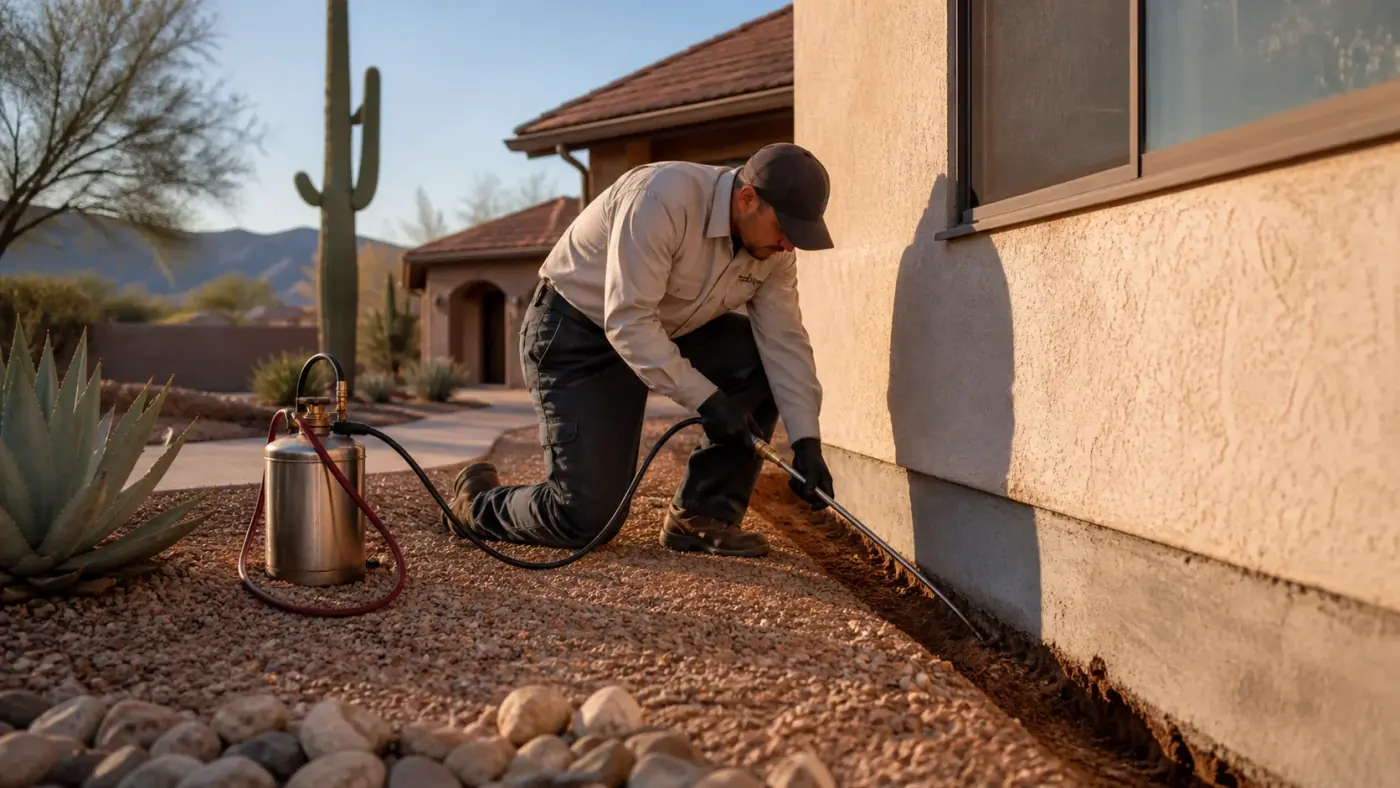
Why termites fly right after a monsoon storm
Termites swarm in Tucson after monsoon rain because the storm is the signal a mature colony has been waiting for all year. The University of Arizona Cooperative Extension publication Arizona Termites of Economic Importance (AZ1369, Baker and Marchosky) says subterranean termites in Arizona tend to swarm en masse on the night after a substantial summer rain, and that the desert subterranean termite, Heterotermes aureus, takes flight at dusk during the monsoon season, July to September.
Picture the ground in June. It is baked as hard as a patio paver, and a newly landed termite has no hope of digging into it. One soaking storm softens the top of the soil for a day or two. That is the window. The colony releases its winged adults, called alates or swarmers, and they flutter toward your lights, drop their wings, pair off and try to burrow in. The same extension publication puts their survival at usually less than 1 percent. Most of them end up as dinner for geckos and nighthawks, or as a drift of papery wings on the porch by morning.
So a swarm is not an invasion from somewhere else. It is a grown colony, close by, telling you it has been there for years.
What ignoring a swarm can cost a Tucson house
Ignoring a termite swarm near the house mostly costs you time, and the desert subterranean termite uses time very well. The University of Arizona Cooperative Extension calls Heterotermes aureus the most destructive termite in Arizona: it can damage dry, sound structural wood instead of waiting for rot, and it builds shelter tubes up a foundation that often run past twenty-four inches.
Here is how that tends to play out. It is a cool night in October and the house has finally stopped radiating August. You are asleep. A foot from your headboard, behind the stucco, pale workers are filing up a mud tube they built over the stem wall where nobody looks. They are eating the bottom plate the wall stands on, and the baseboard in front of it, from the inside out, leaving a painted shell that looks perfect. There is no smell. There is no sound you would ever hear. The only clue so far is a patch of paint by the closet that went a little wavy last spring, and you blamed the swamp cooler.
Then one day you find it. A pencil-thin tube hangs from the garage ceiling like a tiny stalactite, the drop tube the extension describes. A screwdriver slides into a door frame like it is cardboard. Or worst of all, a buyer's inspector finds it the week your house is in escrow, and the treatment and the repairs land on your side of the table.
The honest counterweight comes from the University of Arizona homeowner guide, Termite Management for Homeowners (AZ1356): termites take a very long time, often years, before structural damage shows up. That is good news. It means a swarm this month gives you runway. Waiting until next monsoon is how you spend it.
Termite or flying ant: what landed on your patio
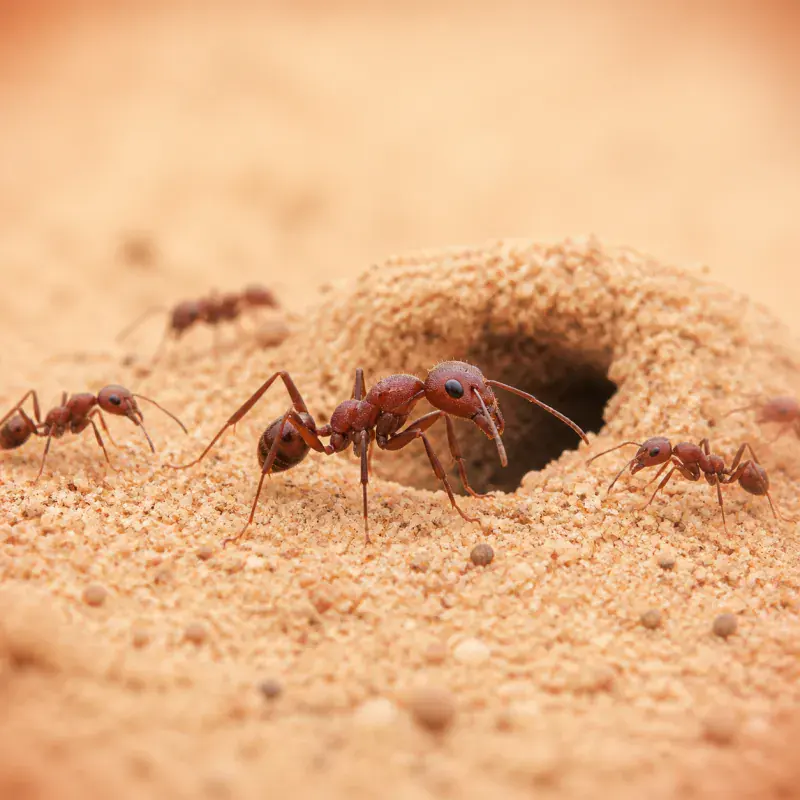
Most winged insects piled under a Tucson porch light after a storm are termites or ants, and you can tell them apart with the naked eye. According to AZ1369, termites have four wings of equal size that fold flat over the back and a broad waist, while ants have wings of unequal size and a pinched waist. Then check the details against this table.
| Swarmer | What it looks like | When it flies | What it means for the house |
|---|---|---|---|
| Desert subterranean termite | Pale yellow to yellow-brown body, nearly clear wings, about half an inch long with wings | Dusk, after monsoon rain, July to September | The structural one. Check the stem wall this week. |
| Tube-building desert termite (Gnathamitermes perplexus) | A little over half an inch with wings, abdomen banded dark brown and cream | Summer nights, often after rain | Eats dead grass and brush. The extension says it will not cause structural damage. |
| Light western drywood termite (Marginitermes hubbardi) | Pale yellow with light wings, about half an inch | Dusk, June into September, not tied to rain | Lives inside dry wood with no soil contact. Look for pellets that keep coming back. |
| Winged ants | Pinched waist, front wings noticeably longer than the hind wings | Often the same time of year as termites | Not termites. A nuisance with a different fix. |
If you can, sweep a few into a jar of rubbing alcohol. The University of Arizona guide recommends collecting live ones in alcohol for identification, and whoever inspects the house will be glad you did. If they turn out to be ants, our ant control in Tucson page covers that side of things.
What to do the morning after a swarm
The morning after a swarm, your job is to find out whether that colony has a route into your house, and you can do most of it yourself with a flashlight, a screwdriver and forty minutes. The checklist follows the University of Arizona homeowner guidance.
- Note where the wings piled up. Inside matters more than outside: AZ1369 says desert subterranean swarmers are rarely found within structures, so indoor swarmers point to activity close at hand.
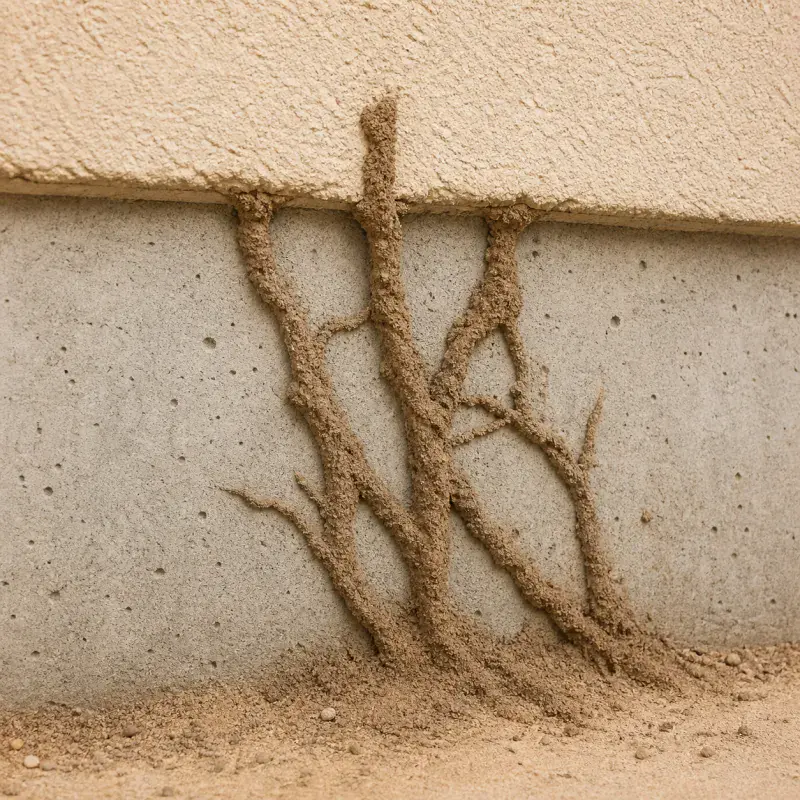
- Walk the stem wall, the band of foundation between the soil and the stucco, looking for pencil-width mud tubes. Then check the garage walls and ceiling for tubes hanging down.
- Look where pipes and ducts come up through the slab, at cracks in the garage floor, and at the joint where the wall meets the soil. The extension names all three as entry points.
- Tap baseboards and door frames every few inches with a screwdriver. A hollow sound, or the tip breaking through, means galleries.
- Break an inch out of any tube you find and look again in a few days. A rebuilt tube is an active one.
Then take away what the colony wants, which is damp soil against your foundation. AZ1356 is specific about it:
- Keep about four inches of bare stem wall between the soil line and the stucco, so tubes are visible
- Grade the soil so water runs away from the house, and keep the first foot along the stem wall dry
- Plant shrubs and trees at least 18 inches from the stem wall, and keep main irrigation lines more than 18 inches away
- Keep untreated wood out of contact with soil, and exterior woodwork at least six inches above grade
- Avoid digging along the stem wall, since disturbing that soil breaks an existing treated barrier
Two Tucson habits undo all of this: the drip emitter tucked right against the house and the decorative rock bed piled up over the stem wall. Pull both back. You lose nothing except termite cover. The swarm check is one item on a longer list, and our monsoon pest checklist for Tucson puts it next to the mosquito, scorpion and drain jobs the same storms bring.
When DIY is not enough
DIY stops being enough the moment termites are confirmed in or on the house, because nothing from the hardware store reaches a colony living in the soil under a slab. Standard subterranean treatment, as AZ1356 describes it, means a trench around the structure plus rodding or drilling under patios that butt against it, which is licensed work with licensed products. These are the signs you have crossed that line:
- Swarmers or piles of wings inside the house, especially bunched at one window or one bathroom
- Mud tubes on the stem wall, or drop tubes from the garage or a ceiling
- Tubes that rebuild after you break them
- Wood that sounds hollow or gives under a screwdriver, or paint bubbling on a wall with no plumbing behind it
- A house more than about five years old with no record of treatment, since the University of Arizona guide warns the builder's final grade treatment degrades over time
If even one of those fits, the sensible next step is an inspection, not another weekend with a garden sprayer, and our guide to what happens during a termite inspection in Tucson shows exactly what that visit covers. Call (888) 217-8578 and we connect you with a licensed local provider who covers your ZIP code, from midtown out to Marana. They can confirm the species, map every tube and tell you whether liquid treatment or bait suits your house. Our termite control in Tucson page explains how those treatments work, and the Tucson termite treatment cost guide lays out typical market ranges, not a quote, so you know what a fair number looks like before anyone walks your foundation.
And breathe. A termite swarm in Tucson in August is about as surprising as a haboob in July. Plenty of houses here sit on ground with termites nearby and stay sound for decades, because somebody noticed, checked the stem wall and got the soil treated. The swarm was the early warning. You are already ahead of the version of this story that ends in escrow.
How the call works
- Tell us what you are seeing. Scorpions in the garage, mud tubes on the stem wall, a rat in the engine bay. A few details are enough.
- Get routed by ZIP code. Your call goes to an independent, licensed provider that actually covers your part of the Tucson metro.
- Book on the same call. Most providers can quote an inspection or treatment window right away.
Same-day or overnight service depends on which providers are taking calls in your part of Tucson, how many technicians are free and how busy the week is. Nobody can promise it, and capacity shifts from one neighborhood and one week to the next.
Frequently asked questions
When is termite swarm season in Tucson?
Termite swarm season in Tucson runs mainly from July through September, tied to the monsoon. The University of Arizona Cooperative Extension says the desert subterranean termite takes flight at dusk after a rain during those months. The drywood termite found at Tucson elevations flies from June into September whether it rains or not, so a small swarm on a dry evening is normal too.
Do termite swarmers eat wood?
No. Swarmers are the colony's winged reproductives, and their only job is to pair up and start new colonies. The University of Arizona Cooperative Extension notes that the workers, which stay behind in the soil and inside wood, are the termites that actually do the damage. A swarm matters because it tells you a mature colony is close by, not because the flying insects are chewing on anything.
Should I spray termite swarmers?
Spraying termite swarmers does very little, because the insects in the air are not the colony. A vacuum or a broom handles the ones indoors. Save a few in rubbing alcohol for identification, then check the stem wall and garage for mud tubes. If termites turn out to be in the house, the fix is a soil treatment or a bait system put in by a licensed provider.
Are striped winged termites after a storm a problem?
Usually not. Winged termites with a dark brown and cream banded abdomen that fly on summer nights after rain match the tube-building desert termite, Gnathamitermes perplexus. The University of Arizona Cooperative Extension says this species feeds on dead grasses and brush and will not cause structural damage to a home. If you are not sure what you caught, a sample in alcohol settles it.