
What a kissing bug is, and why Tucson has so many
A kissing bug is a blood-feeding true bug, also called a conenose bug or triatomine bug, and the Tucson foothills are one of the best places in the country to meet one. The University of Arizona Cooperative Extension counts seven species in Arizona. The one on your porch is almost always Triatoma rubida, the most abundant kissing bug in the state and most common in the foothills around Tucson and Phoenix. Triatoma protracta turns up in Pima County too.
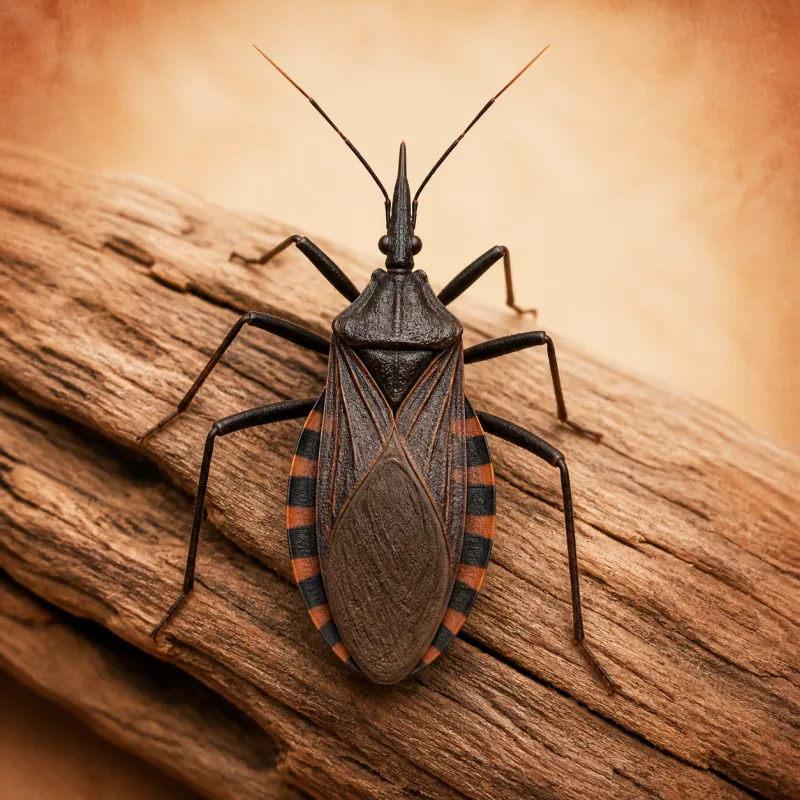
Adults are dark brown to black, half an inch to a bit over an inch long, with a narrow cone-shaped head, thin straight legs and, on T. rubida, reddish marks along the edge of the abdomen. They do not live in your house. They live in pack rat nests and feed on the rats. When a nest sits against your stem wall, the bugs are one short flight from your pillow.
When kissing bug season hits Tucson
Kissing bug season in Tucson runs from early May into late July and peaks in the last two weeks of June. A 2022 University of Arizona flight study put the heaviest T. rubida and T. protracta flights between about June 20 and July 5. They fly around dusk on warm, still evenings, roughly 79 to 95 degrees with wind under 9 miles per hour. A windy night buys you a break. A calm 88-degree evening in late June does not.
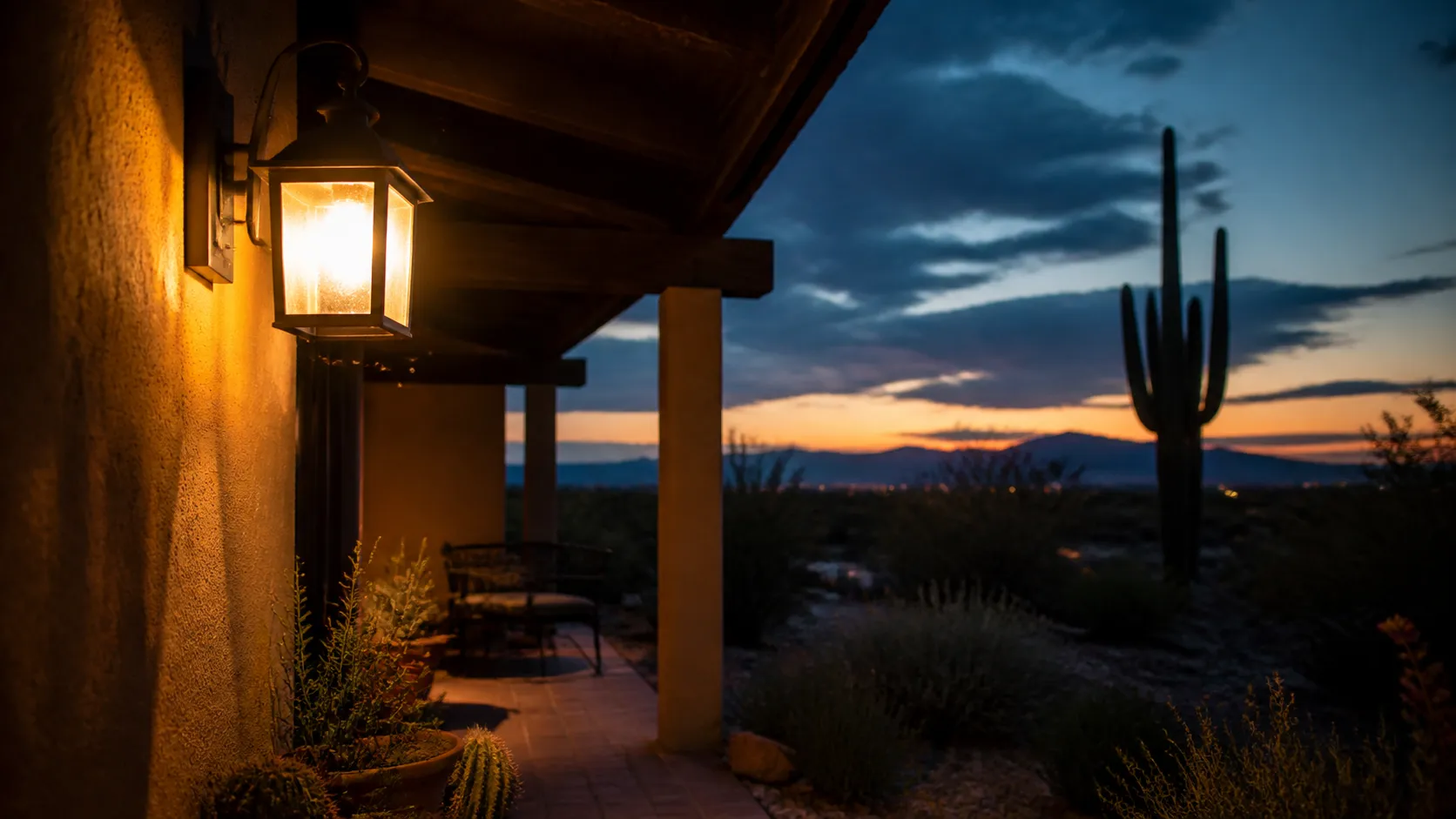
Your porch light is the brightest thing in the desert, so that is where they land. At dawn they hunt for somewhere dark: a gap under the front door, a torn screen, a pet door. That is how they end up between the mattress and box spring, waiting for night.
What a kissing bug bite does to you
A kissing bug bite is painless while it happens, and that is the whole problem. The saliva contains an anesthetic, so the bug feeds for 10 to 30 minutes on your face, neck, arms or legs while you sleep, then crawls off. By morning there is a welt, or a cluster of them, that itches for a week or two. Most Tucsonans who get bitten never see the bug.
The danger is rarely the first bite. It is the fifth. The University of Arizona Cooperative Extension calls severe allergic reaction the biggest health risk kissing bugs pose: some people become sensitized after repeated bites and react to the next one with anaphylaxis. Our guide to kissing bug bite symptoms and when to go to the ER lays out which reactions are just itch and which ones mean 911.
When to seek medical care: call 911 for trouble breathing, swelling of the lips, tongue or throat, dizziness, spreading hives or a racing heartbeat after a nighttime bite. For anything less, the Arizona Poison and Drug Information Center in Tucson, which covers Pima County, answers around the clock at 1-800-222-1222. Wash the bite with soap and water, use an oral antihistamine for the itch, and if you find the bug, seal it in a jar and bring it: bites cannot be identified without the insect.
The real Chagas disease risk in Tucson
Chagas disease risk from a Tucson kissing bug is low but not zero. The parasite, Trypanosoma cruzi, travels in the bug's feces, not its saliva, and infects people only when droppings get scratched into the bite or rubbed into the eyes or mouth. A 2010 survey cited by the University of Arizona Cooperative Extension found over 40 percent of kissing bugs collected around Tucson carrying the parasite, yet transmission to people here is very rare: 28 locally acquired infections were documented across the whole continental United States between 1955 and 2015.
Why so few? Our species pass the parasite poorly, rarely stay in contact with people, and do not colonize homes the way South American species do. The CDC's Emerging Infectious Diseases journal called Chagas an endemic disease in the United States in 2025; the local math did not change. The Extension's advice: finding a kissing bug at home, or being bitten, does not by itself mean you need a test. See your doctor if fever, fatigue or swelling follows a bite, and mention the bug.
How to tell a kissing bug from its look-alikes
Most bugs brought to Tucson providers in a jar are not kissing bugs. Here is how to sort the usual suspects without a magnifying glass.
| Insect | How to tell | Does it bite people? |
|---|---|---|
| Kissing bug | Half inch to just over an inch, cone-shaped head, thin straight legs, orange or reddish marks along the abdomen edge. Flies to lights May to July. | Yes, at night, painlessly |
| Leaf-footed bugs, including the western conifer seed bug | Similar size, but the hind legs carry a flat, leaf-like flare. Browner, often with a white zigzag on the back. | No, feeds on plants and seeds |
| Boxelder bug | Half inch, black with thin red lines, clusters on sunny walls in fall. | No |
| Other assassin bugs: masked hunter, wheel bug | Masked hunter nymphs are coated in dust and lint. The wheel bug has a cog-shaped crest on its back. | Only if handled, a painful defensive jab, no Chagas risk |
The legs settle it: skinny and straight means kissing bug, a flattened paddle on the hind legs means seed bug, and you can go back to bed. Still unsure? Trap it under a cup and drop it in a jar. Never crush one in your fingers: the droppings carry the parasite.
How a licensed provider controls kissing bugs
Kissing bug control in Tucson starts with the pack rat nest, not the spray can. The University of Arizona Cooperative Extension recommends having a pest management professional remediate rodent nests under, against or near the building, within about 350 feet, and leaving more distant nests alone. Remove the midden and you remove the breeding site, the blood supply and the launch pad, which is why kissing bug calls and pack rat control are usually the same visit.
Then exclusion and light discipline:
- Door sweeps, weather stripping and silicone on every gap, intact screens on windows, doors and vents
- Porch bulbs swapped for warm LEDs that emit little ultraviolet, fixtures moved away from doors, lights off during the late June peak
- A residual application around door and window frames, eaves and the foundation by a licensed applicator
- Woodpiles and debris pulled away from the house, pets sleeping indoors
- A bed net tucked under the mattress for anyone who has already had a severe reaction
Indoors, the first tool is a vacuum, not a fogger: bugs hide in cracks, drapes and bedding, and a careful pass with the bag sealed and trashed clears them without smearing droppings. Rats in the attic too? Ask about rodent control on the same visit.

Typical kissing bug control cost in Tucson
These are typical market ranges across the Tucson metro, not a quote. The provider you are connected with sets the price after inspecting.
- Kissing bug treatment built around sealing, a residual perimeter application and lighting changes: roughly $150 to $350
- Pack rat nest removal and exclusion: roughly $200 to $800, depending on how many middens are on the lot
- Quarterly pest service that keeps the perimeter treated: roughly $90 to $165 per visit
Every pest control business and applicator in Arizona is licensed through the Arizona Department of Agriculture, Pest Management Division, so ask for the license number. When you call, you are routed by ZIP code to an independent licensed provider that works your part of town, from the Catalina Foothills to Vail. For a broader program, see pest control in Tucson.
How the call works
- Tell us what you are seeing. Scorpions in the garage, mud tubes on the stem wall, a rat in the engine bay. A few details are enough.
- Get routed by ZIP code. Your call goes to an independent, licensed provider that actually covers your part of the Tucson metro.
- Book on the same call. Most providers can quote an inspection or treatment window right away.
Same-day or overnight service depends on which providers are taking calls in your part of Tucson, how many technicians are free and how busy the week is. Nobody can promise it, and capacity shifts from one neighborhood and one week to the next.
Frequently asked questions
Should I get tested for Chagas disease after a kissing bug bite in Tucson?
Usually not on the bite alone. The University of Arizona Cooperative Extension says finding a kissing bug at home or being bitten does not by itself call for a Chagas test, because local transmission is very rare. See your doctor if fever, fatigue or unusual swelling follows a bite, and bring the insect if you kept it.
Why do I keep finding kissing bugs in my bedroom?
Because a pack rat nest is close by and your lights are bringing the adults in. Kissing bugs fly from woodrat nests to porch lights on calm evenings from May into July, then slip under doors at dawn and hide in bedding. Clearing nearby nests, sealing door gaps and changing the porch bulbs usually ends the repeat visits.
Do LED porch lights really keep kissing bugs away?
They help, and the University of Arizona Cooperative Extension recommends them. Kissing bugs steer toward ultraviolet, and warm-white LEDs emit very little of it. An LED will not make a lit doorway invisible, so pair it with fixtures moved away from doors, curtains drawn in lit rooms and porch lights off during the late June peak.
Can I remove a pack rat nest myself to get rid of kissing bugs?
You can, but think twice. A Tucson midden often holds kissing bugs, scorpions and black widows along with the rat, and tearing into it without gloves, a mask and a plan for the animal scatters everything toward the house. A licensed provider removes the nest, traps the rat and closes the entry points in one visit.