
How to tell you actually have bed bugs
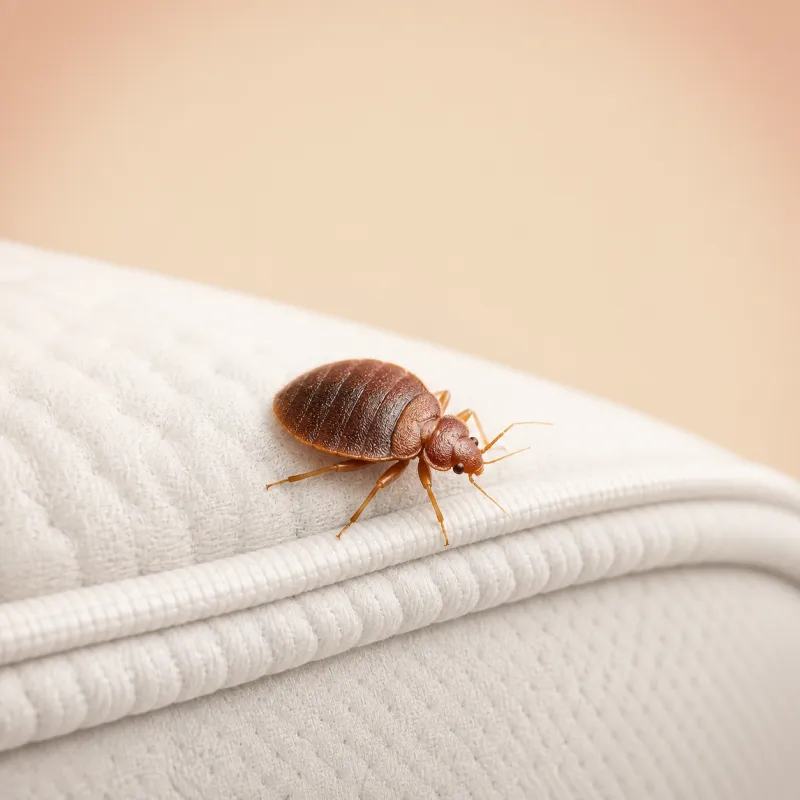
Bed bugs leave three kinds of evidence, and the bites are the least reliable of them. An adult bed bug is about the size and color of an apple seed, 5 to 7 millimeters long, flat and oval when hungry and swollen and redder after a meal, according to the Environmental Protection Agency. Nymphs are smaller and nearly translucent, and the eggs are pearl white and the size of a pinhead, glued into seams. What to look for, in order of usefulness:
- Rusty or dark brown dots on the mattress seams, box spring edges and the back of the headboard: these are droppings, and they smear when wet
- Small blood smears on sheets and pillowcases
- Shed skins, pale and papery, in the same seams
- Live bugs, usually within a few feet of where you sleep: screw holes, bed frame joints, behind the headboard, inside the mattress piping
- Bites, often in lines or clusters on skin that was exposed at night, though many people do not react at all
If you find the droppings but not the bug, you still have bed bugs. Tucson has plenty of other biters (kissing bugs, August mosquitoes, the occasional spider) that get blamed on bed bugs and vice versa, so a licensed provider will want to see the evidence, not just the welts. Bed bugs are not known to spread disease, per the EPA, which is the one piece of good news in this section.
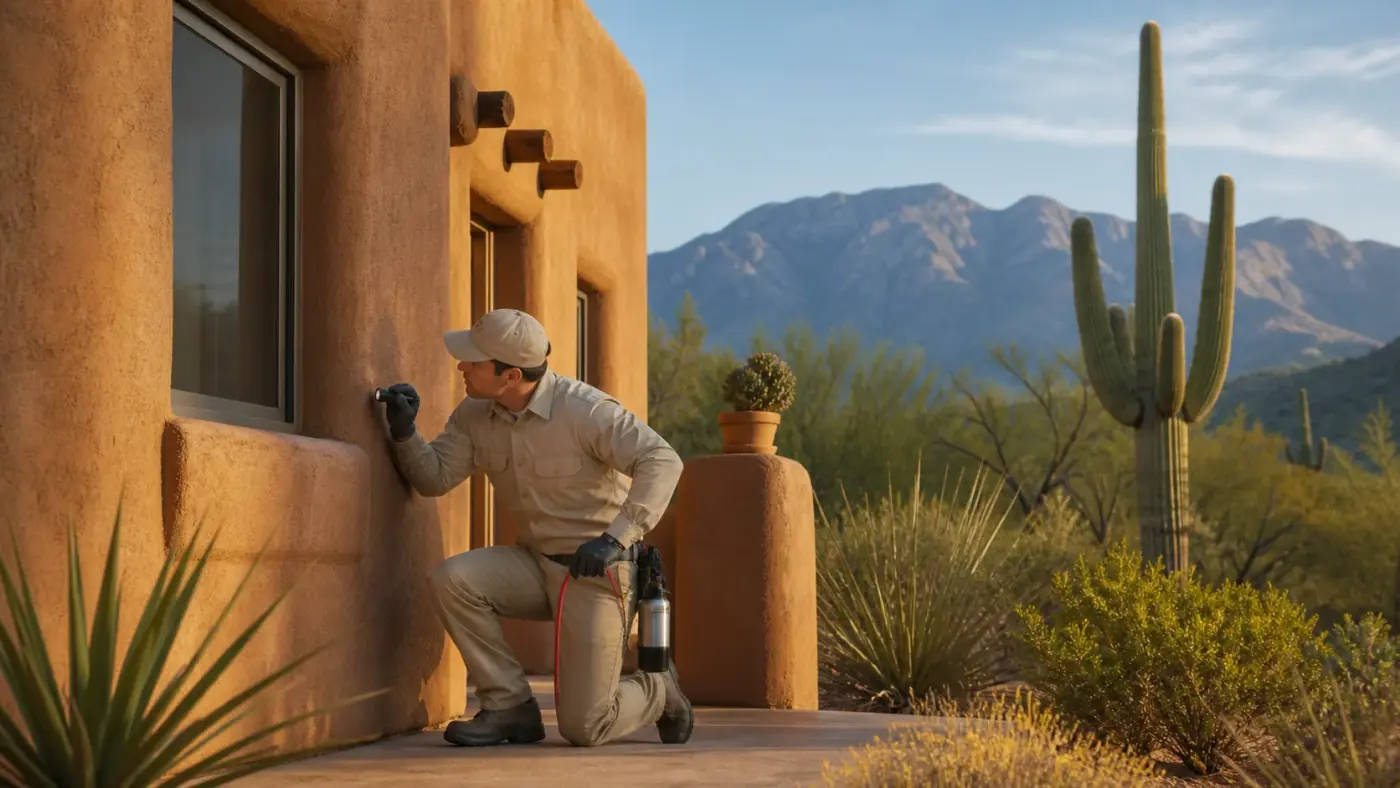
How bed bugs get into Tucson homes
Bed bugs arrive in Tucson the same way they arrive everywhere: in luggage, in secondhand furniture and through shared walls. The Pima County Health Department has noted that most of the bed bug complaints it receives come from apartment complexes, where bugs travel between units along pipes and wiring. Nationally the resurgence is tied to travel and insecticide resistance, and Tucson is a travel town, with the interstate, the air base, the university and a winter population that rolls in every fall with a trailer full of belongings.
The local wrinkle is the August turnover. Tucson is a university city where thousands of leases roll over in the same few weeks, and that moves a lot of used mattresses, couches and futons between rentals, curbs and thrift stores. A free couch on the curb in a student neighborhood is a gamble. So is a "barely used" mattress from an online listing. If you rent in a multi-unit building, Arizona law (A.R.S. 33-1319) requires the landlord to give tenants bed bug educational materials and requires you to notify the landlord in writing when you find bed bugs; single-family rentals are excluded from that statute.
Heat treatment vs chemical treatment in Tucson
Heat treatment kills every life stage of a bed bug in one day, which is why it has become the go-to option for Tucson providers; chemical treatment costs less per visit but takes two or three visits to catch the eggs that hatch after the first one. Bed bugs die at 113 degrees Fahrenheit after about 90 minutes of constant exposure and within 20 minutes at 118 degrees, and eggs need 118 degrees for 90 minutes, according to research summarized by Virginia Cooperative Extension. A heat crew brings the rooms to roughly 120 to 140 degrees, uses fans to push hot air into voids and furniture, and holds it for hours with sensors in the cold spots.
| Factor | Heat treatment | Chemical treatment | Combination |
|---|---|---|---|
| Visits | One, 6 to 10 hours | Two to three, 10 to 14 days apart | One heat day plus a residual application |
| Kills eggs | Yes, same visit | Not reliably; follow-ups catch hatchlings | Yes |
| Residual protection | None once the house cools | Weeks of residual on treated surfaces | Residual in cracks, voids and outlets |
| Resistance issues | None | Pyrethroid resistance is documented in many populations | Reduced |
| Prep burden | Remove heat-sensitive items, stay out for the day | Heavy: laundering, bagging, moving furniture | Moderate |
| Cost | Higher up front | Lower per visit, adds up | Highest |
Why heat wins so often here: Tucson bed bug calls skew toward rentals and people who need the problem gone before the next lease or the next houseguest, and one long hot day beats three weeks of visits. The combination approach, heat plus a residual dust or spray in wall voids and outlets, is what many providers recommend for apartments where a neighbor can reinfest you. And no, a Tucson summer does not heat-treat your house for free. Your attic might hit 140 degrees in July; your bedroom, where the bugs live, never gets close.
Prep checklist before a Tucson bed bug treatment
Prep is where bed bug treatments succeed or fail, and the provider you are connected with will send a list. This is what it almost always includes.
For any treatment:
- Wash bedding and clothing on hot and run the dryer on high for at least 30 minutes, then seal the clean items in new plastic bags
- Reduce clutter, especially under the bed and in closets, but do not carry loose items into other rooms
- Do not throw out the mattress yet; dragging it through the house spreads bugs, and you may not need to replace it
- Keep sleeping in the infested room so the bugs do not follow you to the couch
For heat treatment, also:
- Remove aerosols, candles, lighters, medications, cosmetics, wine, vinyl records, houseplants and pets
- Leave furniture in place; the crew needs it there, heated through
- Plan to be out of the house for the full day
For chemical treatment, also:
- Pull beds and furniture a few inches away from the walls
- Empty nightstands and dressers so the drawers can be treated
- Stay out until the product has dried, usually a few hours
Typical bed bug treatment cost in Tucson
Bed bug treatment in Tucson typically costs $400 to $900 per room for heat and $250 to $500 per room per visit for chemical work, with whole-home heat treatments most often landing between $1,200 and $4,000 depending on square footage. These are typical market ranges drawn from published 2026 price guides, not a quote. The provider sets the price after an inspection.
| Service | Typical range | What sets the price |
|---|---|---|
| Inspection | Often free, or $50 to $200 credited toward treatment | Number of rooms |
| Heat treatment, one bedroom | $400 to $900 | Room size, furniture volume |
| Heat treatment, whole home | $1 to $3 per square foot; $1,200 to $4,000 typical | Square footage, ceiling height, clutter |
| Chemical treatment, per room | $250 to $500 per visit, two to three visits | Severity, follow-ups needed |
| Chemical treatment, whole home | $1,500 to $5,000 total | Rooms, number of visits |
| Mattress and box spring encasements | $50 to $150 per bed | Often recommended after treatment |
Ask whether the price includes a follow-up inspection and a retreatment guarantee (30 to 90 days is common), and whether the provider sets monitors under the bed legs afterward. A cheap treatment with no follow-up is how people end up paying twice.
What not to do when you find bed bugs
Do not set off a fogger. The EPA says total release foggers should not be the only method used against bed bugs because the droplets do not penetrate the cracks where they hide, and a study published in the Journal of Economic Entomology found over-the-counter foggers had little or no effect on field-collected bed bugs, many of which are pyrethroid resistant. A fogger does accomplish one thing: it scatters the bugs deeper into the walls and into the next room.
The four mistakes that spread bed bugs: fogging, moving to another bedroom to sleep, dragging an infested mattress through the house to the curb, and spraying random insecticides that push bugs into the walls. Each one turns a one-room problem into a whole-home bill.
Also skip the rubbing alcohol spray (a fire hazard with a poor kill rate), the diatomaceous earth snowstorm (useful in thin lines inside voids, useless as a carpet topping, and a lung irritant) and the wait-and-see approach, because a female lays eggs steadily and a few bugs in June is a serious problem by September. One call connects you with a licensed local provider who does this every week. If the bites turn out to be something else, our Tucson pest control page covers the usual suspects, from roaches to rodents.
How the call works
- Tell us what you are seeing. Scorpions in the garage, mud tubes on the stem wall, a rat in the engine bay. A few details are enough.
- Get routed by ZIP code. Your call goes to an independent, licensed provider that actually covers your part of the Tucson metro.
- Book on the same call. Most providers can quote an inspection or treatment window right away.
Same-day or overnight service depends on which providers are taking calls in your part of Tucson, how many technicians are free and how busy the week is. Nobody can promise it, and capacity shifts from one neighborhood and one week to the next.
Frequently asked questions
Will a Tucson summer kill bed bugs on its own?
No. Bed bugs need sustained temperatures of roughly 113 to 118 degrees Fahrenheit to die, and an air-conditioned Tucson bedroom never gets there, even when the attic does. They can also go months without feeding, so an empty snowbird house does not starve them out. Only a deliberate heat treatment or a chemical program ends an infestation.
How long does a bed bug heat treatment take in Tucson?
Most whole-home heat treatments run 6 to 10 hours in a single day. The crew heats the rooms to around 120 to 140 degrees, circulates the air with fans and monitors cold spots with sensors. You leave for the day with pets, medications and heat-sensitive items, and you can sleep in your own bed that night.
Do I have to throw away my mattress after bed bugs?
Usually not. Heat kills the bugs and eggs inside the mattress, and a zippered encasement afterward traps anything missed and makes future inspections easy. Discarding a mattress is a last resort for a badly soiled or torn one, and if you do, wrap it in plastic and mark it so nobody carries it home from the curb.
Who pays for bed bug treatment in a Tucson apartment?
Arizona law (A.R.S. 33-1319) requires landlords of multi-unit buildings to provide bed bug educational materials and requires tenants to report bed bugs in writing, but it does not spell out who pays in every case; the lease and how the bugs arrived matter. Notify the landlord in writing first. Landlord-tenant disputes in Arizona go through the Arizona Department of Housing.