
Which mosquitoes bite in Tucson
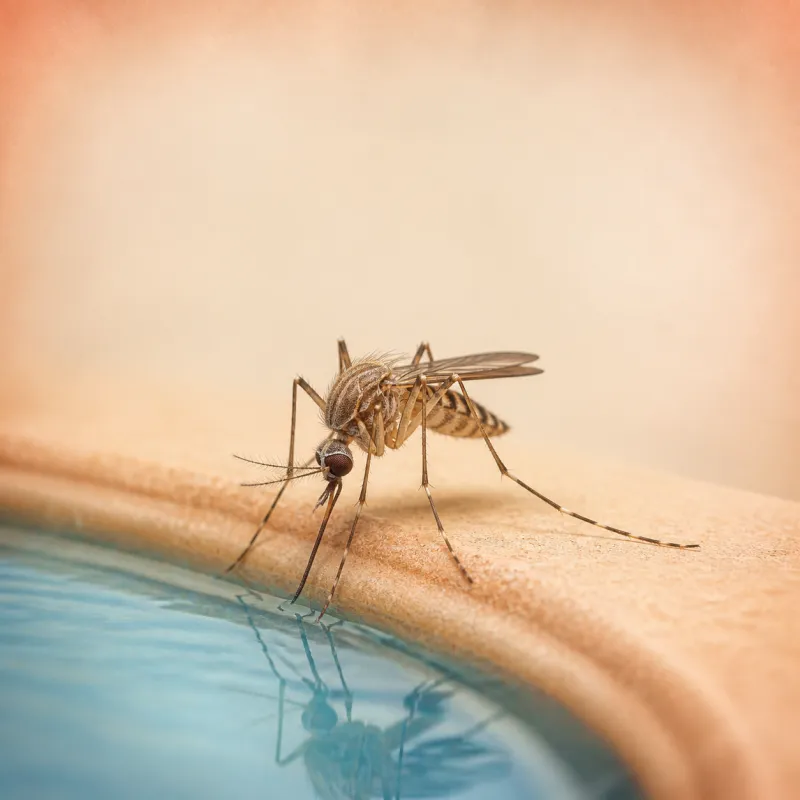
The mosquito biting your ankles at a Tucson barbecue at two in the afternoon is Aedes aegypti, the yellow fever mosquito, a tropical species with no business in a desert. Vector biologists from the Arizona Department of Health Services, Pima County and the University of Arizona documented it established across Tucson in the 1990s. It is small and dark with white-banded legs, bites during the day, and breeds in tiny amounts of water: a plant saucer, a dog bowl, a tarp fold. It flies short distances, so the one biting you almost always hatched on your lot or next door.
The other Tucson mosquito is Culex, the dusk biter that carries West Nile virus and wants bigger, dirtier water: a green pool, a dead fountain, a storm drain. Two habits, and a good plan covers both shifts.
Mosquito season in Tucson runs on the monsoon
Mosquito season in Tucson is the monsoon, officially June 15 through September 30 by the National Weather Service definition. Aedes aegypti eggs glued inside a dry container survive for months, so the first storm that fills the saucers hatches a whole summer of eggs at once, and the calls start a week later.
The disease side is real. In June 2026 the Pima County Health Department reported the season's first probable human West Nile case and confirmed it had detected the virus in mosquitoes through routine trap surveillance. Most infected people never notice, about one in five get a flu-like illness, and a few, mostly older adults, get seriously ill.
What the county asks of you: dump standing water weekly, fix window and door screens, use a repellent with DEET, picaridin or oil of lemon eucalyptus, and move the AC drain hose off the puddle it keeps refilling.
Mosquitoes are only one line on the summer to-do list. Our Tucson monsoon pest checklist lays out what to do before, during and after the storms for termites, scorpions and sewer roaches as well.
How professional mosquito treatment works in a Tucson yard
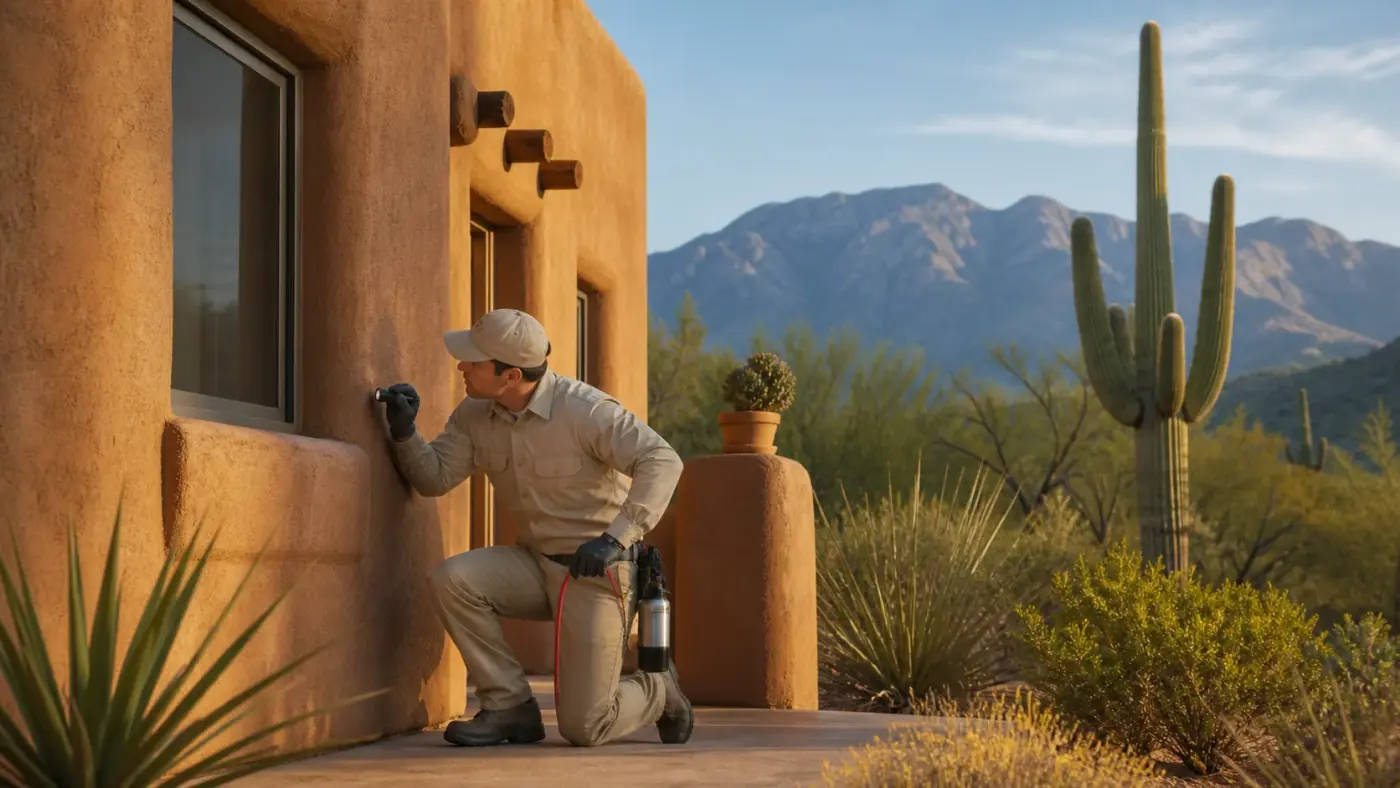
Professional mosquito treatment in Tucson pairs a barrier spray for the adults with larvicide for the water you cannot drain, and the provider you are connected with should walk the yard first.
- Barrier spray: a residual misted where mosquitoes rest through the heat of the day: undersides of leaves, shaded block walls, eaves, dense shrubs. It holds about three weeks in Tucson heat, so plans run on a 21-day cycle.
- Larvicide: bacterial dunks or granules for water that has to stay, a fountain, a pool cover, a valve box; they kill larvae, not adults, and are labeled for use around fish and pets.
- In-yard stations: lured water stations that dose egg-laying females with larvicide they carry to every other puddle they visit, a good match for a mosquito that spreads its eggs around.
- Misting systems: permanent timed nozzles; useful on a big irrigated lot, expensive, and no substitute for emptying saucers.
Any business applying these products must be licensed by the Arizona Department of Agriculture, Pest Management Division. Ask for the number.
What you must fix before any spray can work
No barrier spray in Tucson outlasts a yard that keeps breeding mosquitoes, so the homeowner's half of the job is draining the nursery. Aedes aegypti needs less water than a shot glass holds; walk the lot after the next storm.
| Breeding site | The fix |
|---|---|
| Plant saucers and pot bottoms | Empty weekly, or fill with sand so nothing pools |
| Clogged gutters and flat-roof scuppers | Clear before the monsoon; a plugged scupper is a rooftop pond |
| Pool and spa covers | Pump off rain water within a day or two |
| Irrigation valve boxes and water meter boxes | Lift the lid after storms, fix the drip leak, add a larvicide granule |
| Bird baths and pet bowls | Dump and scrub every three or four days; eggs stick above the waterline |
| Tires, buckets, wheelbarrows, kiddie pools | Store upside down or under a roof; drill tire swings |
| Fountains and ponds | Keep the pump running; still water breeds |
Typical mosquito control cost in Tucson
A one-time mosquito barrier spray in Tucson typically costs $125 to $300, and a seasonal plan through the monsoon typically runs $400 to $1,000, based on published 2026 price guides. These are typical market ranges, not a quote; the provider you are connected with sets the price on site.
| Service | Typical Tucson range |
|---|---|
| One-time barrier spray, average yard | Roughly $125 to $300 |
| Event spray before a party | Roughly $100 to $300 |
| Seasonal plan, every 21 days, roughly June through September | Roughly $400 to $1,000 per season |
| Larvicide or in-yard stations | Usually an add-on priced per station or visit |
| Misting system install | Quoted per property; the most expensive option |
What moves the price: lot size, shade and irrigated planting, water features, and the yard next door. Irrigated lots in Marana and Oro Valley cost more than gravel yards in midtown. If the valve box breeding your mosquitoes also has bees flying in and out, read about bee removal before you lift the lid; for a quarterly service that also covers scorpions and roaches, start with general pest control in Tucson.
How the call works
- Tell us what you are seeing. Scorpions in the garage, mud tubes on the stem wall, a rat in the engine bay. A few details are enough.
- Get routed by ZIP code. Your call goes to an independent, licensed provider that actually covers your part of the Tucson metro.
- Book on the same call. Most providers can quote an inspection or treatment window right away.
Same-day or overnight service depends on which providers are taking calls in your part of Tucson, how many technicians are free and how busy the week is. Nobody can promise it, and capacity shifts from one neighborhood and one week to the next.
Frequently asked questions
Why am I getting bitten by mosquitoes during the day in Tucson?
Because the mosquito biting you is Aedes aegypti, a day-biting species established across Tucson since the 1990s. It is most active after sunrise and in late afternoon, goes for ankles, and breeds in tiny containers a short flight from where it bites. Day bites mean a breeding site on your property or a neighbor's.
How long does a mosquito barrier spray last in Tucson?
About three weeks. Tucson sun breaks down the residual fast and monsoon rain washes some off the foliage, so providers schedule seasonal plans on a 21-day cycle. A spray a day or two before a backyard event gives the best short-term knockdown.
Is West Nile virus actually a risk in Pima County?
Yes. In June 2026 the Pima County Health Department detected West Nile virus in trapped mosquitoes through routine surveillance and reported the season's first probable human case. Most infections cause no symptoms and about one in five cause a flu-like illness, but older adults and people with weakened immune systems can get seriously ill.
Can I control mosquitoes in my Tucson yard myself?
Partly. Draining containers, scrubbing bird baths and dropping larvicide dunks into a fountain or valve box does more than any spray, and the Pima County Health Department asks every resident to do it. What you cannot do well yourself is a proper residual barrier on shaded foliage and walls, where a licensed provider earns the fee.