
What the monsoon wakes up around a Tucson house
The Tucson monsoon wakes up four pests at once: desert subterranean termites, mosquitoes, bark scorpions and sewer roaches, with kissing bugs flying in just ahead of the first storms. The National Weather Service counts the season from June 15 to September 30, though the real rain often holds off until July.
Termites are the expensive one. University of Arizona Cooperative Extension bulletin AZ1369 says desert subterranean termite swarmers fly at dusk after a rain from July to September, and the extension's homeowner guide AZ1356 calls the end of the monsoon the stretch when termites are most active. The swarm is just the part you see.
Mosquitoes are the loud one. UA Extension's mosquito bulletin AZ1221 says Aedes aegypti glues its eggs inside pots, tires and buckets just above the waterline, where they can sit dry for up to a year and hatch when rain refills the container. Its usual flight range is 5 to 100 meters, so the mosquito on your ankle at dinner most likely grew up in your yard or the one next door.
Scorpions and roaches round it out. The UA community IPM team says bark scorpions are active when nights stay above 70 degrees, and Tucson's July and August lows average in the mid-70s by National Weather Service normals. The University of Florida IFAS profile of the American cockroach, our sewer roach, notes that infestations can follow heavy rain. Kissing bugs come first: a 2022 study by Schmidt, Klotz and Miller in the Tucson foothills found them flying to lights from early May to mid-July, peaking around June 20 to July 5.
What skipping the checklist can look like by late August
The worst plausible monsoon case is not one bug. It is three small problems you never saw, all showing up the same week. Picture a Tuesday in late August. The storm blew through at five, the street smells like wet creosote, and you are reading in bed when you notice a few pale insects with see-through wings on the windowsill. Then a dozen. Then a little drift of shed wings along the baseboard.
That windowsill matters. AZ1369 says desert subterranean swarmers are rarely found inside buildings, so when they come out of your bedroom wall, the colony that raised them is close: under the slab, in the framing, a few feet from your pillow. It has been eating since spring, behind drywall you never had a reason to tap. Your homeowners policy will not bail you out, either. The Insurance Information Institute says standard policies do not cover damage from termites or other pests.
Out in the side yard, the saucer under the potted bougainvillea has held rainwater since the weekend, and AZ1221 warns that stagnant monsoon water can turn out mosquitoes by the hundreds of thousands if the larvae get as little as three days. They find you at the patio table, around the ankles, exactly where the bulletin says Aedes aegypti likes to bite. Most bites just itch. But about one in 150 people infected with West Nile virus, AZ1221 notes, develops a severe infection of the brain or spinal cord.
And the bark scorpion that slipped under the worn garage door sweep in June has had all summer to explore. The UA scorpion team says they climb walls, cross ceilings and sometimes drop into beds and bathrooms. Something to think about at 2 a.m., barefoot, on the way down a dark hallway.
None of this is exotic. In Tucson it is just August with the chores skipped.
The checklist: before, during and after the storms
The Tucson monsoon checklist splits into three short lists, and the before list does most of the work. Print it, stick it on the fridge, and check it off twice a year.
| When | Do this | Why it matters |
|---|---|---|
| Before: late May to mid-June | Replace worn door sweeps and weatherstripping, caulk around pipes and eaves | Bark scorpions get in under doors and through gaps |
| Before | Cover weep holes with coarse steel mesh, not caulk | Blocks scorpions while the wall still vents moisture |
| Before | Switch porch lights to yellow bulbs, or keep them off through early July | Kissing bugs fly to lights, peaking late June |
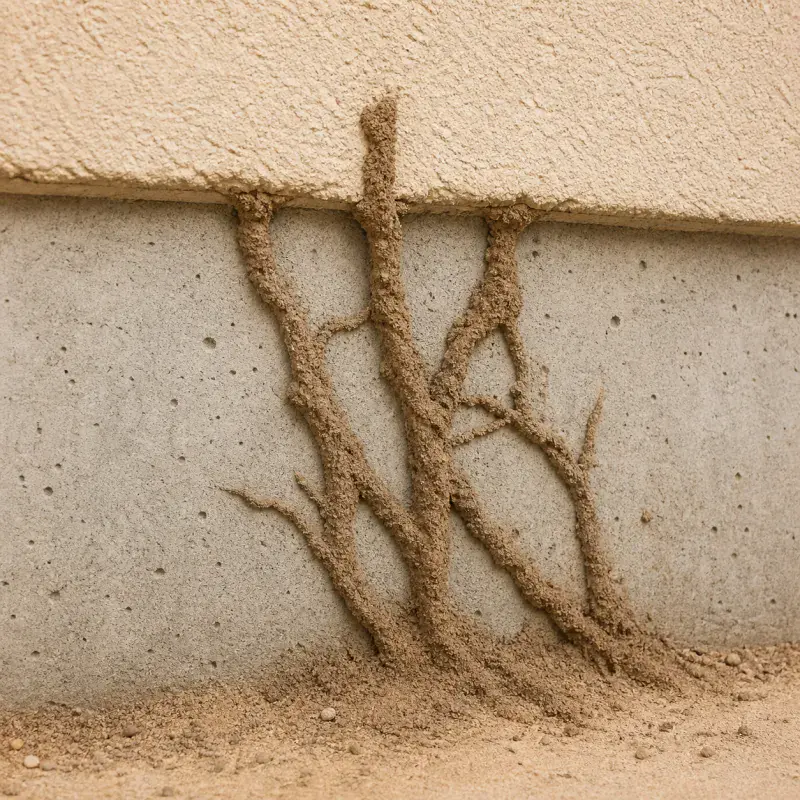
| Before | Pull rock and soil back to show 4 inches of bare stem wall, move emitters 18 inches out | Termite tubes stay visible and the soil by the foundation stays dry |
| Before | Clear gutters, canales and downspouts, and flip or toss spare containers | Rain drains away instead of breeding mosquitoes |
| During: July to September | Tip and scrub every container twice a week | Aedes eggs are glued to the wall just above the water |
| During | Run water into guest bath, laundry and floor drains weekly | A full trap keeps sewer roaches in the sewer |
| During | Kill outside lights on storm evenings and note where wings pile up | Termite swarmers fly at dusk after rain |
| During | Sweep the patio with a flashlight before the dog goes out | KGUN 9 reports Sonoran Desert toads surface after storms and can kill a dog that mouths one |
| After: late September to October | Walk the stem wall and garage for mud tubes, tap baseboards | UA advises an inspection near the end of the monsoon |
| After | Regrade soil the storms washed toward the house | Damp soil at the foundation invites termites back |
| After | Clear storm debris, branches and wood piles away from walls | Scorpions shelter under surface objects |
| After | Dump and scrub birdbaths, fountains and pet bowls | Dry eggs left behind can hatch next summer |
Notice what is missing: sprays. Nearly everything on the list is about water, gaps and light, because those are the three things every monsoon pest is looking for.
How to work the checklist yourself
You can handle most of the Tucson monsoon checklist yourself with a caulk gun, a flashlight, a hose and two Saturday mornings, one in early June and one in October. In order of payoff:
- Seal from the ground up. The UA scorpion team says bark scorpions get in under doors and through weep holes, so start with door sweeps and weatherstripping, then caulk around pipes and eaves. Weep holes get coarse steel mesh, never caulk, because the wall needs to breathe. And respect your block wall: UA research found 95% of bark scorpions chose hollow block walls over every other refuge around a home.
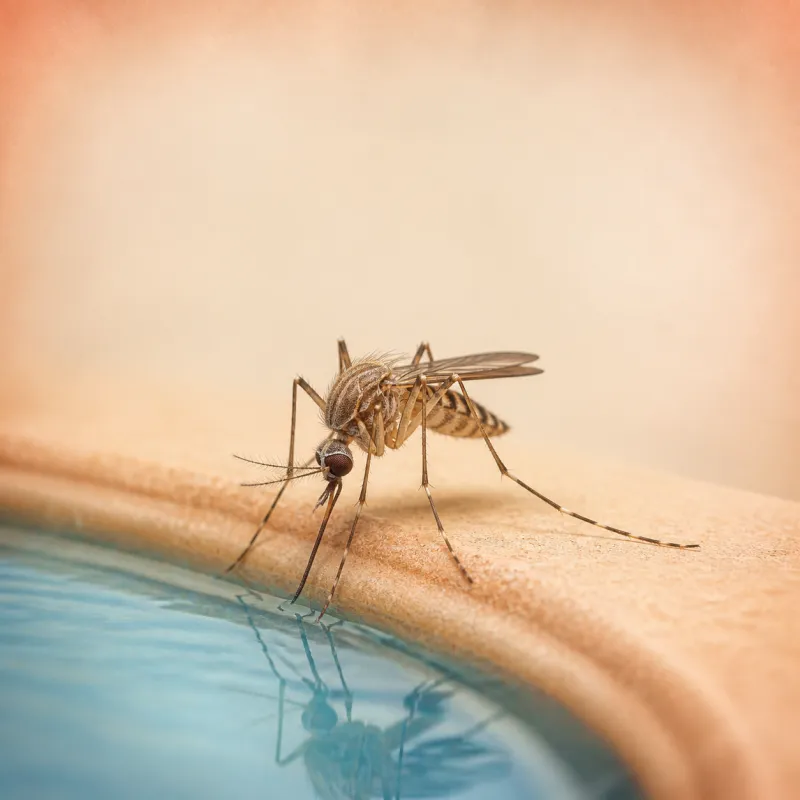
- Shut down the mosquito nurseries. Tip every saucer, bucket, birdbath and toy twice a week, the interval AZ1221 calls ideal, and scrub the inside wall where the eggs stick. Clear the canales. Fix the dripping hose bib. Turn the wheelbarrow over.
- Keep water in every drain. Run the guest tub, the laundry floor drain and the casita sink weekly all summer. A full trap is a door a sewer roach cannot open, and our sewer roach guide goes through the house drain by drain.
- Change the porch light. Yellow bulbs draw fewer insects than white ones, according to UA Extension bulletin AZ1768, which leaves less prey at the door for scorpions. During the late June kissing bug peak, just leave it off. Our kissing bug control page covers what to do if they are already inside.
- Give the stem wall some air. AZ1356 asks for about four inches of bare stem wall between soil and stucco, soil graded away from the house, and shrubs and main irrigation lines at least 18 inches out. That decorative rock pile against the foundation looks great. Termites think so too.
After the last storm, walk the stem wall and garage with the flashlight for pencil-width mud tubes and tap the baseboards for a hollow sound. Our termite swarm season guide covers that check step by step.
When DIY is not enough
DIY is not enough once the signs point into the walls or under the slab, because a hose and a caulk gun cannot reach there. Watch for these five:
- Swarmers or piles of wings inside the house, on a sill, in a tub or along a baseboard.
- Mud tubes on the stem wall, a garage wall or a ceiling, or a tube you broke open that was rebuilt within days.
- Scorpions inside more than once a week after you sealed, or any in a bedroom or a child's room.
- Daytime mosquito bites that do not let up after two weeks of tipping containers. The source is somewhere you have not found, like a valve box or the neglected pool over the fence.
- Sewer roaches that keep coming with every trap in the house full. The door is a pipe you cannot see.
If one of those fits, the sensible next step is a phone call rather than another month of guessing. Call (888) 217-8578 and we connect you with a licensed local provider who can inspect the stem wall and slab, track down the entry point or breeding site, and treat with products labeled for that pest. Typical market ranges, not a quote: a termite inspection is often free with treatment and otherwise roughly $75 to $150, and a one-time mosquito barrier spray roughly $125 to $300. Our termite control page explains treatment, the mosquito control page covers seasonal plans, and our guide to pest control cost in Tucson puts every service side by side.
Why October is the easy part
October is the easy part of the Tucson pest year. The swarms are done, and a house that had its checklist worked is a dull place to be a bug. AZ1356 recommends a termite check in spring and again near the end of the monsoon anyway, so this is not a new chore. It is the same walk around the house with a better list. Do it, and the monsoon goes back to being what it should be: the best smell in the desert and a lightning show from the back porch.
How the call works
- Tell us what you are seeing. Wings on the windowsill after a storm, mud tubes on the stem wall, mosquitoes that will not quit. A few details are enough.
- Get routed by ZIP code. Your call goes to an independent, licensed provider that actually covers your part of the Tucson metro.
- Book on the same call. Most providers can quote an inspection or treatment window right away.
Same-day or overnight service depends on which providers are taking calls in your part of Tucson, how many technicians are free and how busy the week is. Nobody can promise it, and capacity shifts from one neighborhood and one week to the next.
Frequently asked questions
What bugs come out during monsoon season in Tucson?
Termite swarmers, winged ants, mosquitoes, sewer roaches and bark scorpions are the big five around Tucson homes in a monsoon summer. Desert subterranean termites swarm at dusk after rain from July to September, mosquito eggs hatch when storms refill containers, and bark scorpions stay active on nights above 70 degrees. Kissing bugs peak just before, in late June.
How long does monsoon season last in Tucson?
The National Weather Service defines the Arizona monsoon as June 15 through September 30, although the first real storms often arrive in early July. For pest work, start the checklist in late May and finish with a foundation and termite check in October, after the last storms.
Are the flying bugs after a storm termites or ants?
Look at the wings and the waist. The University of Arizona Cooperative Extension notes that termites have four wings of equal size while ants have two pairs of unequal size, and ants have a pinched waist where termites do not. Both swarm in the same season, so look closely. Termite swarmers inside the house are worth a call.
When should I get a termite inspection in Tucson?
Twice a year is the University of Arizona recommendation: once in spring and again near the end of the monsoon, when termites are most active. You can walk the stem wall yourself each time, or have a licensed provider do an annual inspection, which the extension service describes as the better option.