
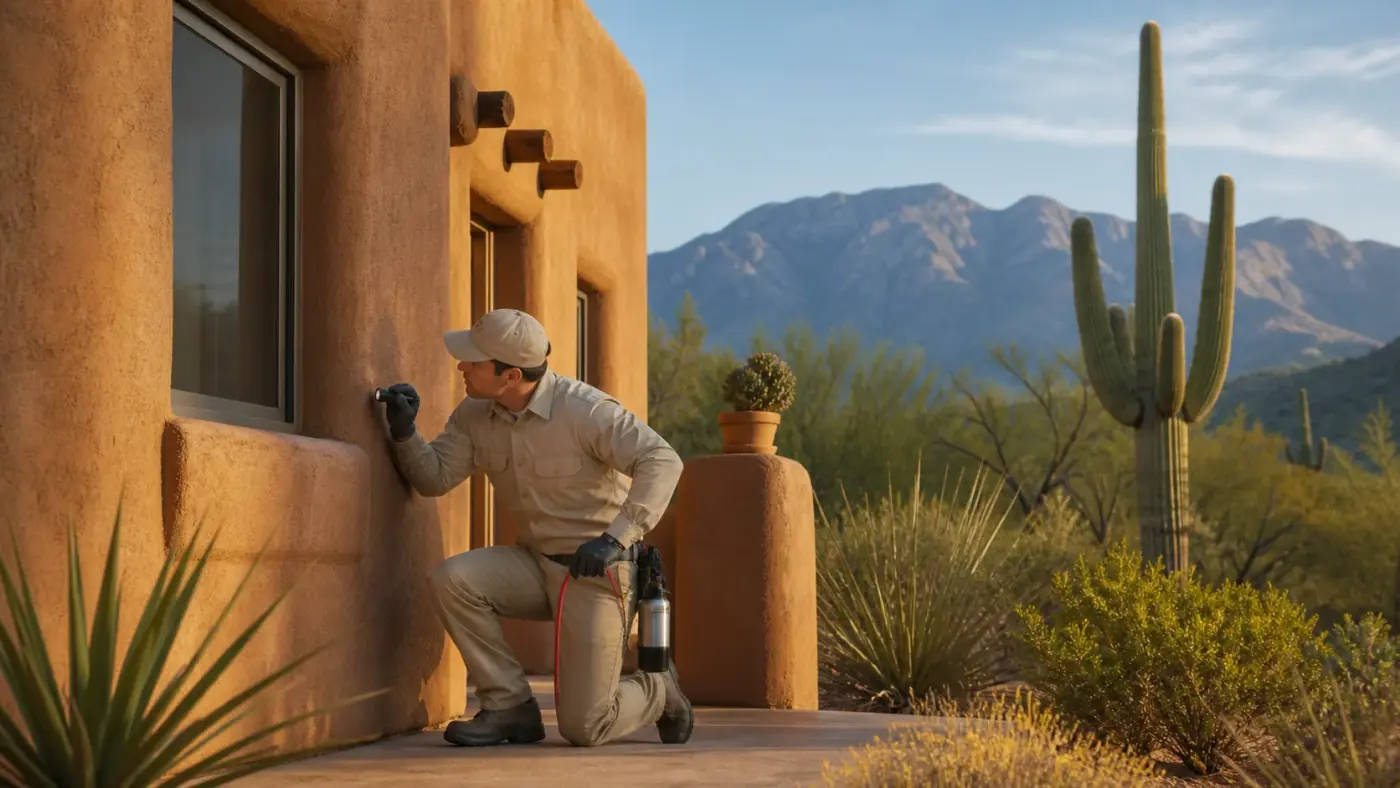
What pest control in Tucson actually covers
Pest control in Tucson is a year-round job against desert species, not a spring ant spray. The Sonoran Desert around the city is home to the Arizona bark scorpion, the desert subterranean termite, triatomine kissing bugs and the white-throated woodrat, and every one of them treats a stucco house as a nicer version of a rock pile. A general pest plan covers the routine crawlers. The specialty work is its own call. Here is the lineup, with the page for each:
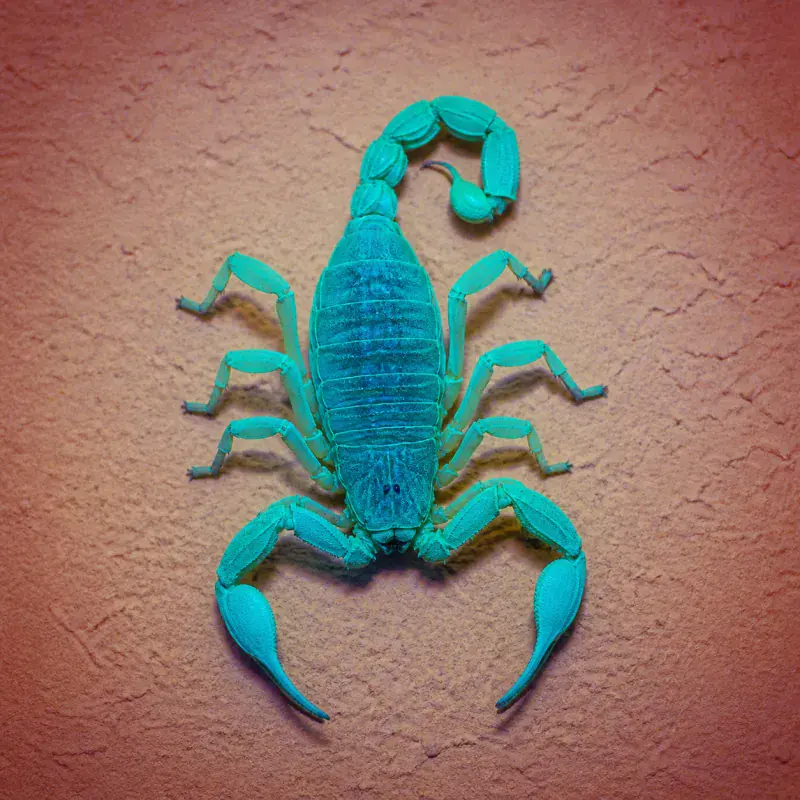
- Scorpion control: bark scorpions climb walls, slip under doors and glow under a UV flashlight, which is how providers hunt them at night.
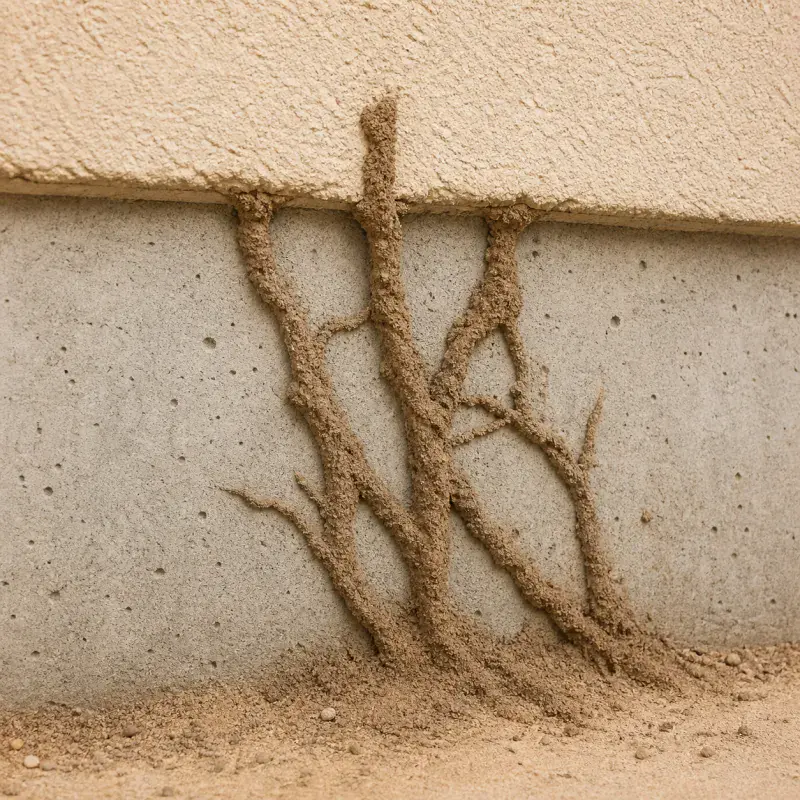
- Termite control: desert subterranean termites build mud tubes up stem walls and swarm after monsoon rains.
- Kissing bug control: conenose bugs that feed at night, come to porch lights and can carry the parasite that causes Chagas disease.
- Pack rat control: woodrats that nest in cholla and engine bays, chew wiring and harbor kissing bugs.
- Rodent control: roof rats in citrus trees and attics, house mice in garages.
- Bed bug treatment: heat or chemical work that has nothing to do with the desert and everything to do with travel and used furniture.
- Ant control: harvester ant mounds, leafcutters stripping your roses, tiny sugar ants in the kitchen after a storm.
- Spider control: black widows in block wall weep holes and under patio furniture.
- Cockroach control: American cockroaches, the big sewer roaches that come up drains in summer.
- Bee removal: wild honey bee colonies in southern Arizona should be treated as Africanized, according to University of Arizona research.
- Mosquito control: monsoon puddles, clogged gutters and neglected pools.
Typical pest control cost in Tucson
A quarterly general pest service in Tucson typically runs $100 to $300 per visit and monthly service $40 to $65 per visit, based on published price guides for the Tucson market. Treat those as typical Tucson-area ranges, not a quote. The provider you are connected with sets the price after looking at the house, the lot and what is actually crawling on it.
| Service | Typical Tucson range | Notes |
|---|---|---|
| One-time general visit | $150 to $350 | Initial visits cost more than maintenance visits because they take longer |
| Monthly service | $40 to $65 per visit | Common in scorpion-heavy neighborhoods through summer |
| Bi-monthly service | $50 to $100 per visit | The most common Tucson plan |
| Quarterly service | $100 to $300 per visit | Often the lowest annual total |
| Termite treatment | $800 to $2,500 | Liquid treatment on an average slab home; see the cost guide |
| Scorpion home sealing | $300 to $1,500 | Door sweeps, weep hole screens, caulking, roofline gaps |
| Rodent exclusion | $300 to $1,500 | Sealing entry points; attic cleanup is extra |
| Bed bug heat treatment | $1,200 to $4,000 whole home | Priced around $1 to $3 per square foot |
Two things push a Tucson bill up: lot size, because a half-acre in the foothills takes longer to treat than a Midvale Park yard, and whether you need specialty work folded in. A scorpion service that includes a monthly UV hunt costs more than a basic perimeter spray, and it should. For roof rats, pack rats, bed bugs and the rest side by side, see our guide to what pest control costs in Tucson by service.
Do it yourself pest control in Tucson: when it works and when it does not
Do it yourself pest control in Tucson works for the easy stuff and fails, expensively, for the three pests that matter most here. A lot of Tucson homeowners try the DIY route first, and that is fair, so here is a straight answer.
DIY is fine for: a perimeter spray around a home with no scorpion history, baiting a harvester ant mound in a corner of the yard (the University of Arizona Cooperative Extension recommends hydramethylnon baits applied in the heat of the day when the ants are least active), sealing door sweeps and weep holes, and trapping the occasional house mouse.
DIY is a bad bet for: termites, because the job is trenching and drilling a continuous barrier; bed bugs, because over-the-counter foggers do not reach the cracks where they hide and many populations resist pyrethroids, a finding published in the Journal of Economic Entomology; and a real bark scorpion problem, because spray alone does little against a pest that lives inside your block wall and walks in under the door. Sealing plus a night UV hunt is the actual work. Kissing bugs and Africanized bees are not DIY at all. Bees in a wall void are a stinging hazard, and a kissing bug bite is a medical question before it is a pest question. If a swarm just landed in your yard, read our guide to Africanized bee swarms in Tucson before anyone reaches for the hose.
Honest rule of thumb: if the pest can hurt you, eat the house, or survive a can of spray, call. If it is a line of ants on the counter after a storm, a bait station and patience usually win.
How to pick a Tucson pest control company
Start with the license. Every pest control business and every applicator in Arizona must be licensed by the Arizona Department of Agriculture, Pest Management Division, which regulates the structural pest industry and reports more than 1,500 licensed businesses and over 7,000 certified and qualified applicators statewide. The Department runs a public license lookup for businesses and for individuals. Ask for the business license number on the first call and check it before the truck shows up.
Past the license, the questions worth asking:
- Is the technician who will treat my home a certified or qualified applicator?
- Which products will be used, and can I see the labels?
- For scorpions, does the service include sealing and a night UV inspection, or only spraying?
- For termites, will a Termite Action Report be filed with the state, and what does the warranty cover?
- Is there a contract, and what does it cost to cancel?
People search for an exterminator in Tucson, for pest control companies in Tucson and for the best pest control in Tucson and mean the same thing: someone licensed, local and reachable today. The providers in our network are independent businesses. When you call, you are routed to one that covers your ZIP code. Sonoran Pest Co does not send trucks or set prices; the provider does.
Where the providers in our network work
The providers in our network cover the City of Tucson and the suburbs around it, from the Catalina Foothills down to Green Valley and from Vail out to Marana. Inside the city that means the central and midtown neighborhoods (Sam Hughes, Armory Park, Barrio Viejo, Blenman-Elm, the University area), the east side (Tanque Verde, the Houghton corridor, Rita Ranch, Civano), the northwest (Casas Adobes, Flowing Wells, the Foothills) and the south and west (Midvale Park, Drexel Heights, Tucson Estates). Older neighborhoods come with mature trees, irrigation and roof rats. Newer subdivisions come with fresh-cut desert and the scorpions and pack rats that lived there first.
Suburb pages with local detail:
- Pest control in Oro Valley: foothills lots, golf course irrigation, scorpions in newer stucco homes
- Pest control in Marana: Dove Mountain and Continental Ranch, termites in young subdivisions
- Pest control in Sahuarita: Rancho Sahuarita and Quail Creek, with the largest irrigated pecan orchard in the world next door
- Pest control in Green Valley: retirement community, snowbird homes that sit empty all summer
- Pest control in Vail: Rita Ranch's neighbor, open desert and pack rats
Catalina Foothills, Tucson Estates and Flowing Wells are served through the Tucson routing. Call and give your ZIP code.
The Tucson pest calendar: what shows up when
Tucson pests run on heat and rain, not the calendar on the wall. The monsoon officially runs June 15 to September 30 according to the National Weather Service, and that window is when the phone rings hardest.
- March to May: scorpions come out of their winter slowdown as nights warm; harvester ants and kissing bugs get active; Africanized bee swarms peak; the smart time for a termite inspection, before the summer rush.
- June: peak heat drives roaches, crickets and scorpions indoors looking for water; sewer roaches show up in bathrooms; kissing bugs fly to porch lights on warm nights.
- July to September: monsoon. Desert subterranean termites swarm at dusk after storms, per the University of Arizona Cooperative Extension; ants flood indoors; mosquito complaints spike; leafcutter ants strip plants overnight.
- October to November: pack rats and roof rats look for winter quarters in engine bays, sheds and attics.
- December to February: the quiet season, which is the best time for rodent exclusion and scorpion sealing work.
Whatever the month, the fastest way to a fix is a call to a licensed provider who works your side of town. You will be routed by ZIP code.
How the call works
- Tell us what you are seeing. Scorpions in the garage, mud tubes on the stem wall, a rat in the engine bay. A few details are enough.
- Get routed by ZIP code. Your call goes to an independent, licensed provider that actually covers your part of the Tucson metro.
- Book on the same call. Most providers can quote an inspection or treatment window right away.
Same-day or overnight service depends on which providers are taking calls in your part of Tucson, how many technicians are free and how busy the week is. Nobody can promise it, and capacity shifts from one neighborhood and one week to the next.
Frequently asked questions
How much does pest control cost per month in Tucson?
Monthly general pest service in Tucson typically runs $40 to $65 per visit, bi-monthly $50 to $100, and quarterly $100 to $300 per visit, based on published Tucson price guides. Treat those as typical Tucson-area ranges, not a quote. Scorpion services with UV inspections and larger foothills lots cost more. The licensed provider you are connected with sets the actual price.
Is a one-time pest control visit enough in Tucson?
For a single problem like a wasp nest or a roach flare-up, often yes. For scorpions, termites and ants it usually is not, because the source is outside the house and comes back with the heat and rain. Most Tucson homeowners with a scorpion history end up on a bi-monthly or quarterly plan, with sealing done once.
How do I check whether a Tucson pest control company is licensed?
Ask for the business license number and look it up through the Arizona Department of Agriculture, Pest Management Division, which licenses every structural pest control business and applicator in the state and offers a public search for both. An unlicensed operator cannot legally apply pesticides for hire in Arizona, and you would have no recourse if something went wrong.
Do I need pest control in Tucson during winter?
Winter is the slow season but not a dead one. Pack rats and roof rats move into engine bays, sheds and attics in the cooler months, and termites stay active below ground for most of the year. December through February is the best window for rodent exclusion and scorpion sealing, because you are fixing the house before the spring wake-up.