

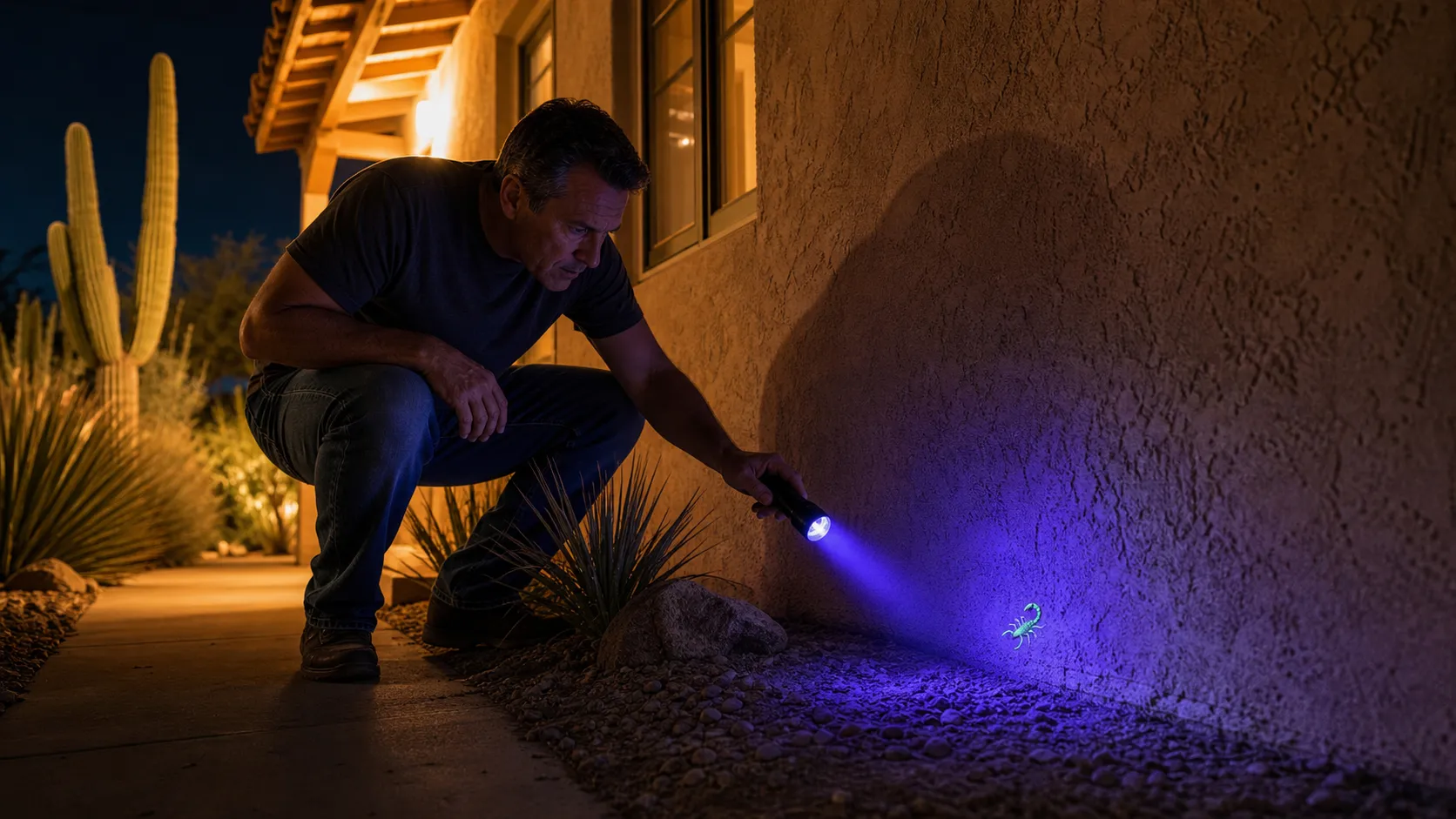
What do bark scorpions eat?
Bark scorpions eat crickets, cockroaches and many other insects. That is the exact wording used by the University of Arizona Cooperative Extension in its publication Scorpions of the Desert Southwest United States, which also notes that Arizona bark scorpions live five to seven years and can be seen drinking from small pools of standing water. Spiders and smaller scorpions get taken too.
So the animal on your wall is not hunting you. It has no use for a person at all, which is worth holding onto at 2 a.m. when one is sitting above the light switch. It is hunting a cricket. Everything else on this page follows from that.
One more piece of biology changes how you should think about your yard. The same extension publication notes that Arizona bark scorpions are not territorial and are usually found living with others, sometimes in dense populations when resources are plentiful. Food, water and shelter in one place does not produce a scorpion. It produces a neighborhood of them.
Where that food comes from in a Tucson yard
The insects a bark scorpion eats arrive because of four things nearly every Tucson house has: night lighting, irrigation, ground clutter and an untreated roach population. The extension publication is direct about the irrigation piece, noting that homes and buildings with irrigated landscapes can support scorpion populations much higher than desert wild land does. Your green yard is an oasis in a place that does not hand them out.
| On the menu | Why it is in your yard | What you can change |
|---|---|---|
| Crickets | White exterior bulbs burning all night, plus irrigated turf and ground cover | Yellow bug bulbs or motion fixtures; move the light away from the door |
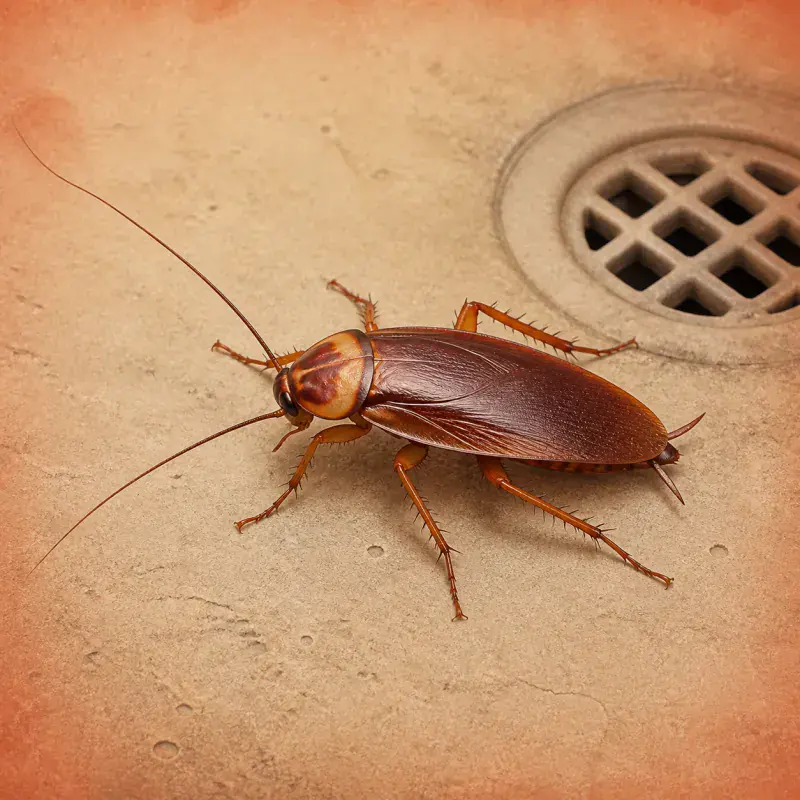
| American cockroaches, the sewer roach | Sewer cleanouts, floor drains, damp irrigation valve boxes, pool equipment pads | Screen and cap cleanouts, fix leaks, keep valve boxes dry, treat for roaches |
| Moths and beetles | The same all-night lighting, plus an open garage after dark | Change the bulbs, close the garage, shift landscape lights away from walls |
| Spiders | Webs in weep holes, eaves and block wall voids | Knock down webs, screen the weep holes, treat spiders on the same visit |
| Standing water | Leaking drip emitters, AC condensate, pet bowls, damp towels on the deck | Repair the leaks, bring bowls in overnight, hang the towels up |
Nothing on that list is exotic. It is a porch light, a bad emitter and a woodpile stacked against the garage wall.
How a bark scorpion finds a meal
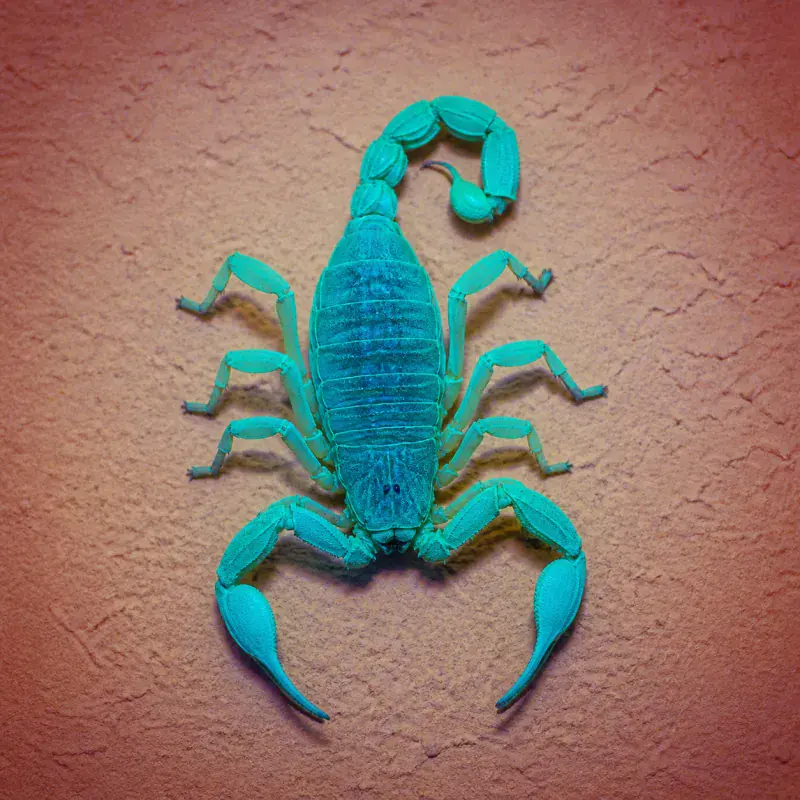
Bark scorpions hunt by ambush rather than by chasing, which is why one will hold perfectly still on a wall for hours. The University of Arizona Cooperative Extension describes scorpions as ambush predators that feed on whatever prey arrives within reach, and says they detect that prey mainly by sensing vibrations through organs on the underside of the body. The pincers carry fine sensory hairs that read movement in the air. The tips of the legs read it through the ground.
The porch light does the work and the scorpion just waits at the edge of it.
Distance matters more than most people expect. Telemetry work cited by the extension puts typical foraging trips around buildings at under 35 yards in a night, often just far enough to find water or a place to hide, with movement concentrated between 7 and 11 p.m. and again from 3 a.m. to sunrise. Translated for a Tucson homeowner: the scorpion in your kitchen lives within about a hundred feet of your kitchen. Usually in the block wall.
How to starve them out, in order
Starving bark scorpions out means removing the insects first, not chasing the scorpions. Work this list top to bottom, because the first two items carry most of the weight:
- Change the lighting. Swap white and blue-white exterior bulbs for yellow bug bulbs or motion-activated fixtures, and get the light away from the door it currently sits beside.
- Kill the standing water. Leaking drip emitters, AC condensate puddles, a weeping hose bib and pet bowls left out overnight all feed the insect population. The extension also warns that damp towels left on the ground are extremely attractive to scorpions looking for moisture, so hang the pool towels up.
- Clear the ground. The extension guidance is to keep wood, rocks, clutter and debris from piling against the home, keep grass short, prune branches back because they are a path to the roof, and minimize low ground cover. Put garbage containers on a frame off the ground.
- Go after the groceries directly. Crickets and American cockroaches are the two biggest items on the menu in this metro, and a provider who treats for scorpions while ignoring the roaches is doing half the job. If you already see sewer roaches on the patio at night, cockroach control in Tucson belongs on the same work order, and our guide to sewer roaches in Tucson shows how to shut the drains they come up through.
- Give it weeks. None of this is fast. You are shrinking an insect population, and the scorpions already living on the property will hold out far longer than their food does.
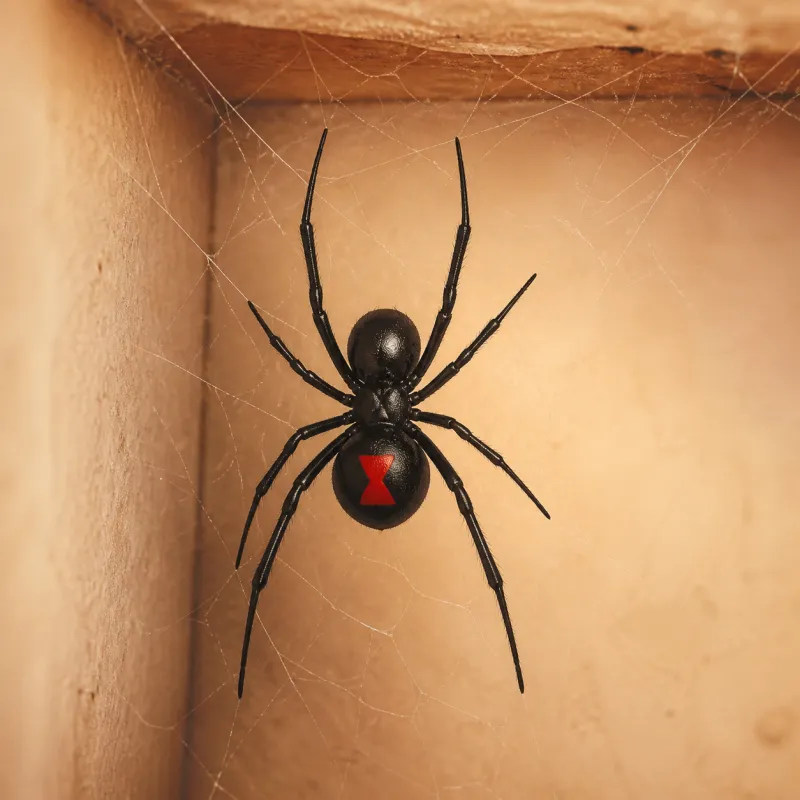
Black widows are worth a mention, because they hold the same weep holes and wall voids and are themselves scorpion food. Finding them everywhere while you clear webs is normal here, and spider control in Tucson gets handled on the same visit.
Where starving them out stops working
Starving bark scorpions out will not clear a Tucson property, and the University of Arizona Cooperative Extension says so in plain language: eliminating their food sources, crickets and other insects, can help but will not eliminate scorpions from around the home. Believe that sentence. Scorpions are built to sit out a lean stretch, so cutting the buffet lowers the pressure instead of ending it.
The block wall is the reason. In research on harborage preference cited by the extension, 95 percent of the scorpions chose hollow block walls as refuge over every other option around buildings and landscapes. Vegetation, tree bark and burrows all got used. The block wall won by a mile, and a Tucson subdivision is ringed in it.
The extension's own conclusion: pest-proofing your home or structure is by far the most effective way to reduce scorpion contact and potential scorpion stings. Food reduction supports that work. It does not replace it.
The specific exclusion steps the University of Arizona recommends:
- Weather-stripping around doors and windows with a snug fit, and door sweeps with no gaps
- Weep holes in brick veneer or weep screed screened with coarse steel mesh, never plugged, because they ventilate the wall void
- Caulk around roof eaves, pipe collars and any other penetration into the building
- Window screens in good repair and tight in the frame
- Hollow block walls stuccoed and capped so they are less inviting harborage
If you do one thing this month, do the door sweeps. The extension lists poorly fitted doorways first among the ways bark scorpions get inside, and a sweep costs less than most service calls.
When sightings keep coming anyway, exclusion work paired with repeat exterior treatment is what a good operator sells. We connect you with a licensed local provider covering your ZIP code, and any prices quoted around town are typical market ranges, not a quote. Ask about sealing, not just spraying. Our scorpion control in Tucson page covers the rest.
How the call works
- Tell us what you are seeing. Scorpions in the garage, crickets swarming the porch light, roaches on the patio at night. A few details are enough.
- Get routed by ZIP code. Your call goes to an independent, licensed provider that actually covers your part of the Tucson metro.
- Book on the same call. Most providers can quote an inspection or treatment window right away.
Same-day or overnight service depends on which providers are taking calls in your part of Tucson, how many technicians are free and how busy the week is. Nobody can promise it, and capacity shifts from one neighborhood and one week to the next.
If any of those signs match what you are seeing, this has moved past the DIY stage. Call (888) 217-8578, describe your Tucson-area home, and a licensed local pro prices the treatment on the call. No obligation either way.
Frequently asked questions
Do bark scorpions eat cockroaches?
Yes. The University of Arizona Cooperative Extension lists crickets, cockroaches and many other insects as what the Arizona bark scorpion feeds on, and American cockroaches are abundant in Tucson because they live in sewers, drains and damp irrigation boxes. A roach problem and a scorpion problem on the same property are usually one problem with two symptoms.
If I get rid of the crickets and roaches, will the scorpions leave?
Not entirely. The University of Arizona Cooperative Extension states that eliminating their food sources, crickets and other insects, can help but will not eliminate scorpions from around the home. Cutting the food supply lowers the pressure and makes your yard less worth visiting. Sealing the house is what actually keeps bark scorpions out of your bedroom.
Does my porch light attract scorpions?
Not directly. A porch light pulls in moths, crickets and beetles, and the bark scorpion follows the food to the edge of the light and waits there. Researchers cited by the University of Arizona Cooperative Extension also found that light motivates bark scorpions to move, with a maximum recorded travel distance of 114 yards under full light. Switching to yellow bug bulbs or motion-activated fixtures removes the dinner bell.
Do bark scorpions eat each other?
Sometimes, and they take spiders as well, but do not count on it thinning the population for you. The University of Arizona Cooperative Extension notes that Arizona bark scorpions are not territorial and are usually found living with others, sometimes in dense populations when food, water and shelter are plentiful. One well fed yard produces a cluster, not a lone survivor.